CV vs Resume: The Difference
In the UK, 'CV' is the standard term for the document you send when applying for almost any job, while in the US the same type of document is usually called a resume, with 'CV' reserved for academic applications. UK CVs also tend to run to one or two pages and leave out details like a photo that some other countries include.
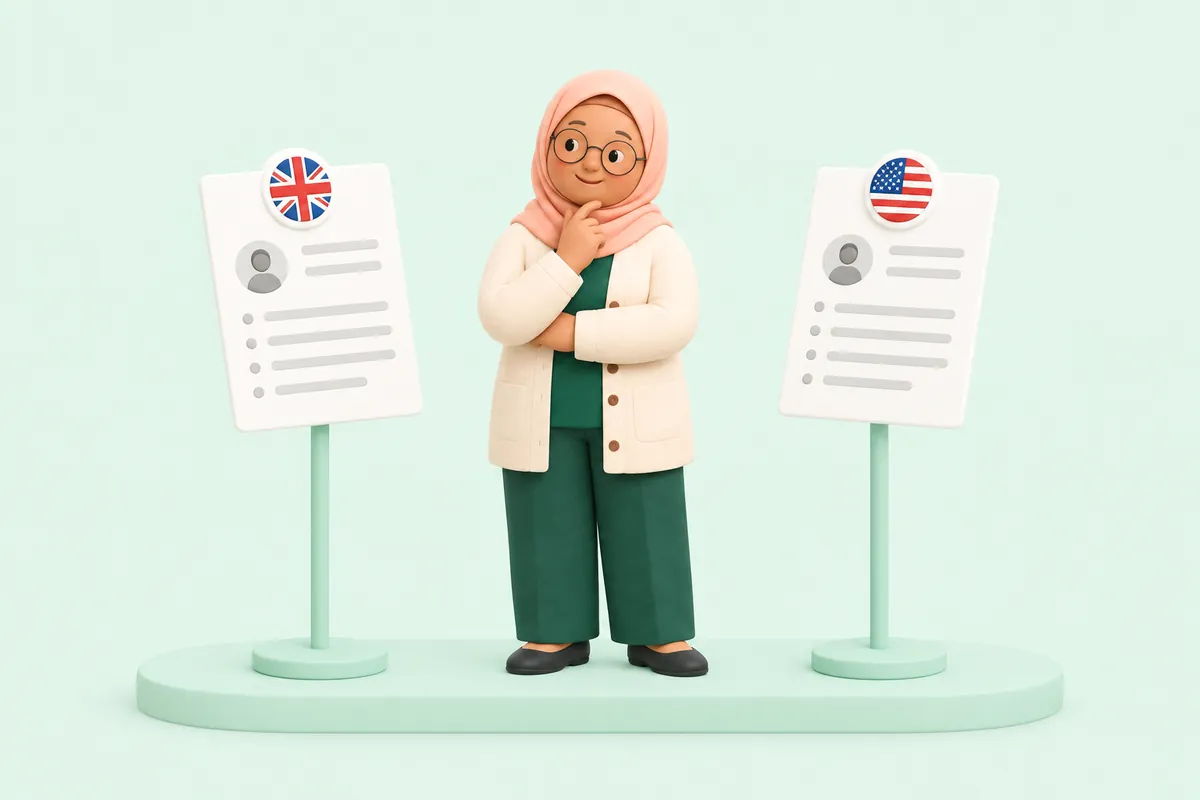
Different meaning of the same word
In the UK, a CV (short for curriculum vitae) is the standard document used for almost every job application, from a first part-time job to a senior role.
In the US, the equivalent document is usually called a resume. There, 'CV' specifically means a longer academic document used for university, research or medical applications, which lists publications and academic history in detail rather than general work experience.
This means the same word can mean two quite different documents depending on which country you are applying in, which is worth keeping in mind if you are job hunting internationally or reading advice written for a different market.
This difference can cause confusion when reading online advice, since a great deal of CV and resume guidance available online is written for a US audience and assumes the shorter, one-page resume format rather than the UK convention.
Length and content
A US resume is typically kept to one page, tightly focused on achievements relevant to the specific job. A UK CV is more commonly one to two pages and can include a slightly broader picture of your background.
US resumes are usually reworked significantly for each application. UK CVs are also tailored, but the base structure tends to stay more consistent between applications, with changes focused on the personal statement and skills rather than a full rewrite.
US resumes also tend to lean more heavily on quantified achievements throughout, while UK CVs place slightly more weight on a clear, steady account of responsibilities and experience, though both value specific, well-described examples.
What to leave off a UK CV
Some countries expect a photo, date of birth, or marital status on an application document. UK CVs should leave all of these out, in line with the Equality Act 2010, which discourages hiring decisions being influenced by this kind of personal information.
If you have previously worked or applied for jobs in a country with different conventions, it is worth checking your CV does not still carry over habits, such as a photo, that would look out of place on a UK application.
This is one of the most common issues when adapting an international CV or resume for the UK market, so it is worth a specific check even if the rest of the document otherwise transfers well.
If you are applying outside the UK
If you are applying for a role in the US or another country that uses 'resume', check local expectations rather than assuming your UK CV format applies directly. Length, tone and what is included can differ by country, and getting this wrong can make an application look unfamiliar with local norms.
Some other countries fall somewhere between the two conventions, so it is always worth a quick check of local advice before sending your usual UK CV abroad, particularly for anything beyond an informal or remote application.
What actually changes if you use the wrong term
Calling your document a resume on a UK application, or a CV on a US one, is unlikely to cause serious problems on its own, since most recruiters understand both terms internationally. The bigger risk is following the wrong document's conventions, such as including a photo on a UK CV because that is expected elsewhere.
In practice, most confusion comes from format and content rather than the label itself, so it is worth focusing your attention on matching local expectations rather than worrying about which word you use.
Academic and research CVs in the UK
There is one UK context where the word 'CV' does mean something closer to the US academic sense: applications for academic, research or some medical roles, where a longer document listing publications, research and qualifications in full detail is expected.
For almost every other UK job application, the shorter one-to-two-page CV described in this guide is what employers expect, so there is no need to follow academic CV conventions unless you are applying specifically within that field.
Cover letters in each convention
The UK cover letter and the US cover letter are broadly similar in purpose, both used to add context and motivation alongside the CV or resume. The main practical difference is usually length and tone, with US cover letters sometimes written more concisely, in keeping with the shorter resume format.
If you are applying to a UK employer, follow UK conventions for both documents rather than mixing styles from different countries, since consistency across your application looks more polished.