Job Interview Tips for Everyday Jobs
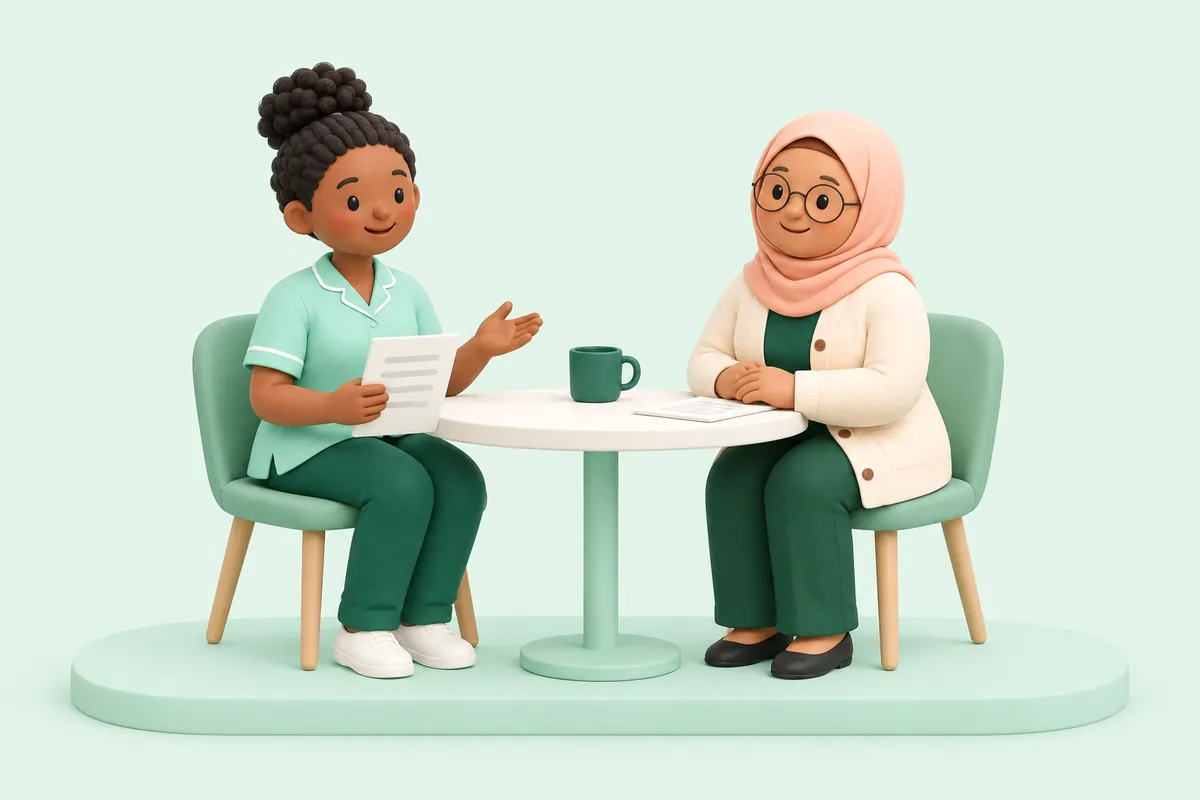
Good interview preparation for an everyday job means knowing the basics about the role and the business, planning your journey and outfit in advance, and having two or three real examples ready that show you can do the job. During the interview, listen carefully, answer honestly, and ask a question or two of your own at the end.
Before the interview: know the basics
Read the job advert again the night before, and check the business's website or social media if it has one, so you have a general sense of what it does and how it presents itself.
Note down the time, location and who you are meeting, if you know. Plan your journey in advance, including how you will get there and how long it will take, with some extra time built in.
If the interview is online or by phone, check your internet connection, the app you will be using, and that your phone is charged well before the interview starts.
For a video interview, sit somewhere quiet with reasonable lighting and a plain background if you can, and log in a few minutes early in case there are any technical issues to sort out.
Prepare a few real examples
Think of two or three short examples from your work, school or personal life that show reliability, teamwork, or dealing well with people, since these come up in almost every everyday job interview.
Keep each example simple: what the situation was, what you did, and what happened as a result. You do not need to memorise a script, just have the outline clear in your head.
If you are short on paid work examples, use school, volunteering or family responsibilities in the same way; a real, specific example from any setting is more useful than a vague claim with nothing behind it.
What to wear and bring
Dress slightly smarter than the job itself normally requires, unless you have been told otherwise. Clean, tidy, comfortable clothing is usually the safest choice for everyday roles such as retail, care, warehouse or hospitality work.
Bring a printed copy of your CV, a pen, and a notepad, even if you have already applied online. It shows preparation and gives you somewhere to note down anything important.
If you use Ceev, you can keep a finished PDF of your CV ready on your phone as well as printed, so you always have a copy to hand.
During the interview: first impressions
Arrive five to ten minutes early, greet whoever meets you politely, and switch your phone to silent before you go in.
A firm handshake if one is offered, a smile, and eye contact when speaking all help set a calm, confident tone from the start.
Nerves are completely normal. If you lose your thread partway through an answer, it is fine to pause, take a breath, and continue; interviewers are used to this and rarely mind.
Answering questions well
Listen to the whole question before answering, and if you are not sure what is being asked, it is perfectly fine to ask them to repeat or clarify it.
Answer honestly and specifically, using the examples you prepared rather than vague, general statements. A short, clear answer with one real example is stronger than a long, rambling one.
If you do not know the answer to something, say so honestly rather than guessing or making something up. Most interviewers respect an honest answer far more than an invented one.
- Listen fully before answering
- Use a real example where you can
- Keep answers focused rather than rambling
- Be honest if you don't know something
Asking your own questions
Most interviews end with a chance for you to ask questions. Prepare one or two in advance, such as what a typical shift looks like, or how training works for new starters.
Asking a thoughtful question shows genuine interest in the role, and it also helps you decide whether the job is right for you.
Avoid asking about pay or holiday as your first question if it has not already come up; these are reasonable questions, but are usually better placed later in the process or once an offer is made.
Common interview formats for everyday jobs
Some everyday jobs use a short, informal chat rather than a formal, structured interview, particularly for smaller businesses. Even so, it is worth preparing in the same way, since the same basic questions tend to come up.
Others, especially larger retailers, care providers or warehouses, may use a short group activity, a trial shift, or a slightly more structured set of questions. If you are told the format in advance, it is worth thinking specifically about what that format will involve.
Whatever the format, the same core preparation applies: know the basics of the role, have a couple of real examples ready, and turn up on time, dressed appropriately, with a calm and polite manner.
After the interview
A short thank-you message the same day or the next morning is a polite, simple way to follow up and shows continued interest in the role.
If you have not heard back after the time frame you were given, it is reasonable to send a brief, polite message asking for an update.
Take a few minutes afterwards to note down anything you would want to remember for future interviews, such as a question that caught you off guard or an answer you were particularly pleased with. This makes each interview a little easier than the last.
A later guide in this series covers following up after an interview in more detail, including example thank-you and chase-up messages.